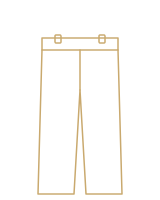
Men’s jeans are often sold with only waist and inseam numbers. Those labels do not describe hip and seat circumference, seated rise, thigh, knee position, waistband level, or the amount of ease a person prefers.
The People’s Jeans uses the same measurement driven engine for everyone. A men’s landing page is a useful way to find the product, but there is no separate men’s drafting engine. Measurements, body relationships, rise, style, and fabric behavior control the draft.
Start With the Whole Lower Body
- Natural waist: Measure the body at the natural waist even if the jeans will sit lower.
- Waist at selected rise: Measure the exact level where the waistband will sit.
- Hip and seat: Measure the fullest circumference with the tape level.
- Seated rise: Sit on a firm chair and measure vertically at the side from natural waist to chair.
- Thigh: Measure the fullest upper thigh without compressing it.
- Knee and crotch to knee: Use the prompted landmark so the lower leg shape changes at the intended level.
- Inseam: Measure from crotch point to the intended finished hem.
Repeat each measurement. If readings conflict, check the landmark and tape position rather than averaging incompatible numbers. If the legs differ, use the larger circumference for a symmetric draft and record the difference for fitting.
Choose the Straight Leg as a Starting Point
A straight leg keeps a relatively consistent visual line below the knee. The builder still lets ease, knee measurement, hem target, rise, and fabric behavior change the result. Preview the finished dimensions instead of relying only on the word straight.
If the goal is a classic bootcut, apply Heritage Bootcut inside the same product. If the goal is roomy workwear or streetwear, use the relevant starting style and then inspect the actual measurements and options.
Match the Fabric Setting to the Denim
Rigid denim depends on drafted room for movement. Stretch denim adds give, but its recovery determines whether the seat and knees return after wear. Measure stretch and recovery after the planned wash treatment.
Do not assume all first pairs need one denim weight. Choose a cloth your machine can handle at pocket, fly, yoke, belt loop, and waistband intersections. Practice construction and topstitching through an equivalent stack of scraps.
Yardage changes with body measurements, fabric width, shrinkage, one way layout, leg shape, pockets, yoke, waistband pieces, and matching requirements. Use the generated materials information, add the measured shrinkage allowance, and test the layout at the actual fabric width.
Handle Raw Denim as a Care Decision
Raw and unsanforized denim may change substantially after washing. If you want a raw wear period, test a marked swatch with the eventual care method and research the specific cloth. Do not make every pattern dimension larger with a vague size up.
Decide whether the finished jeans will be washed, soaked, hung dry, or machine dried. Prepare the muslin and final cloth with that plan in mind. Record post wash width, length, stretch, and recovery.
Sew and Fit Before Permanent Hardware
Follow the generated construction instructions for the selected configuration. The current public closure is a zip fly. Keep the test stage reversible where possible.
- Practice the pocket, fly, seam finish, and topstitching on scraps.
- Baste the main front, back, inseam, outseam, and waistband relationships.
- Stand, sit, walk, climb a step, and squat.
- Check waistband level, seat, crotch depth, thigh room, knee position, and hem break.
- Update the related measurement or option and regenerate when the evidence points to the draft.
- Install dense topstitching, button, and rivets after the test is accepted.
A made to measure draft is a more relevant starting point, not a promise that the first sewn pair cannot need correction. Fabric, posture, preferences, measurement technique, and construction all remain part of fit.
Use One Purchase for Personal or Client Jeans
The $49 purchase includes lifetime access and regeneration. You can create separate measurement profiles for friends or paying customers and sell the finished jeans you sew. Keep the digital pattern files private. They cannot be shared, resold, or redistributed.
For client work, record the measurement date, waistband level, style choices, fabric batch, wash plan, test fitting notes, and approved changes. That record turns one configurable system into a repeatable service.
Frequently Asked Questions
What defines straight leg jeans compared with other cuts?
Straight leg jeans keep a relatively consistent visual line below the knee. The actual result still depends on knee, hem, ease, rise, and fabric settings.
What measurements matter for men sewing jeans?
Waist, waist at the selected rise, hip and seat, seated rise, thigh, knee position, and inseam work together. No one measurement can diagnose every fit issue. Use accurate inputs and test the draft in comparable fabric.
How much denim do I need?
Yardage depends on body measurements, fabric width, shrinkage, directional layout, pockets, yoke, waistband pieces, and the selected leg. Use the generated materials information and test the layout at the actual fabric width before buying.
Should I prewash raw denim before cutting?
Choose the care and fade plan before cutting. If you skip prewashing, measure a wash test swatch and accept the later shrinkage and dye behavior. Do not compensate with a vague size up. Use measured fabric evidence and a test pair.
Ready to configure a straight leg starting draft? Build The People’s Jeans →